
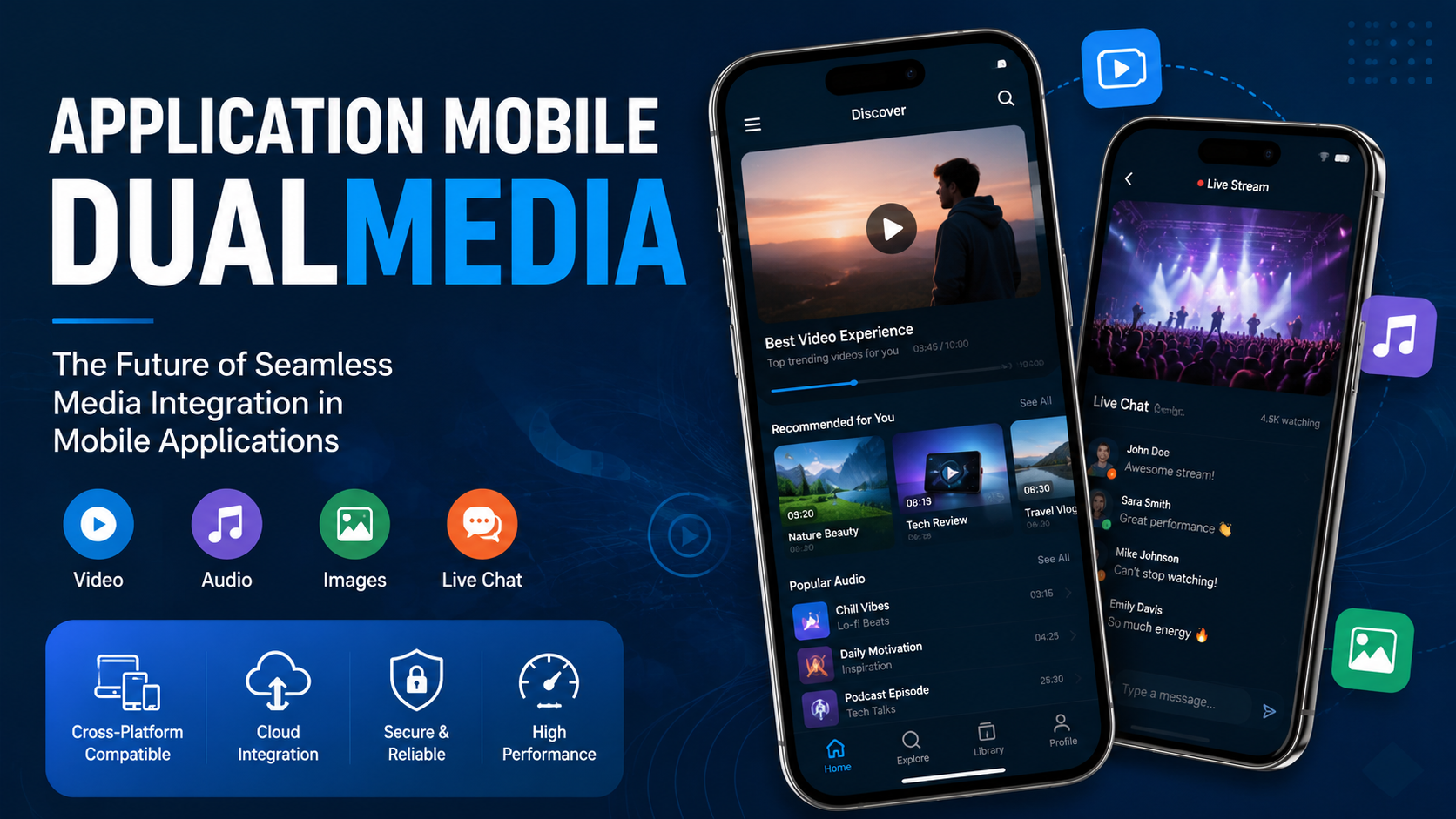
Application Mobile DualMedia The rapid evolution of mobile technology has transformed how businesses communicate with users, distribute content, and deliver digital services. Among the many innovations shaping this landscape, the application mobile DualMedia concept has emerged as a powerful approach for organizations seeking seamless multimedia integration, enhanced user engagement, and scalable mobile experiences.
As mobile applications continue to dominate digital interaction, users now expect more than basic functionality. They demand immersive experiences, instant access to media, synchronized content delivery, and intuitive interfaces that work flawlessly across devices. This is where an application mobile DualMedia becomes increasingly relevant.
Whether used for entertainment, business communication, education, e-commerce, or digital publishing, DualMedia applications are redefining how mobile ecosystems operate. This article explores the meaning, functionality, benefits, architecture, and future potential of application mobile DualMedia systems in depth.
What Is an Application Mobile DualMedia?
An application mobile DualMedia refers to a mobile application designed to manage, distribute, or synchronize two forms of media simultaneously within a unified user experience. The term “DualMedia” generally involves the integration of multimedia content such as video, audio, images, interactive graphics, live streaming, or text-based communication into one cohesive mobile platform.
Unlike traditional applications that focus on a single media type, a DualMedia mobile application combines multiple communication channels to improve engagement and usability.
For example, a learning platform may integrate:
- Live video lectures
- Interactive text discussions
- Downloadable PDFs
- Audio playback
- Real-time notifications
All of these elements function together as part of a DualMedia ecosystem.
In many industries, application mobile DualMedia solutions are becoming essential because modern audiences consume content through multiple formats at the same time.
Why Application Mobile DualMedia Matters in Today’s Digital World
The rise of mobile-first behavior has fundamentally changed consumer expectations. Users no longer interact with applications in a linear way. Instead, they move fluidly between watching, listening, reading, and communicating.
An application mobile DualMedia supports this behavior by creating a richer and more adaptive digital environment.
Increased User Engagement
Applications that combine multiple media formats keep users engaged longer. Video content paired with interactive features or real-time communication encourages deeper interaction.
Streaming platforms, for instance, often integrate chat systems, personalized recommendations, and social sharing tools within the same mobile environment.
Enhanced Information Delivery
Different users absorb information differently. Some prefer visual explanations while others respond better to audio or text-based learning.
A DualMedia approach allows applications to accommodate various learning and consumption preferences simultaneously.
Better Mobile Experience
Modern users expect seamless transitions between media types without delays or technical issues. An effective application mobile DualMedia system minimizes friction and improves overall usability.
Competitive Advantage
Businesses that invest in advanced multimedia mobile solutions often outperform competitors by offering more dynamic and personalized experiences.
This is especially true in sectors such as:
- Online education
- Digital marketing
- Entertainment
- Telemedicine
- News publishing
- E-commerce
Core Features of an Application Mobile DualMedia
A successful application mobile DualMedia platform typically includes a combination of advanced technical and user-centric features.
Multimedia Synchronization
One of the defining characteristics is synchronized media playback and interaction. Users may watch a video while receiving complementary text information or interactive overlays in real time.
Cross-Platform Compatibility
Modern DualMedia applications must work consistently across:
- Android devices
- iOS devices
- Tablets
- Smart TVs
- Wearable devices
Cross-platform optimization ensures accessibility and user retention.
Real-Time Streaming
Many application mobile DualMedia systems support live streaming combined with secondary interaction layers such as chat, polling, or audience participation.
Cloud-Based Content Management
Cloud integration enables efficient storage, synchronization, and media delivery across devices.
This allows users to continue their sessions seamlessly regardless of the device being used.
Adaptive User Interface
Responsive and adaptive interfaces are critical. The application must dynamically adjust media presentation according to screen size, bandwidth, and user preferences.
Offline Accessibility
Many advanced applications now support offline downloads for selected media content, ensuring uninterrupted user access even without internet connectivity.
Industries Using Application Mobile DualMedia Solutions
The adoption of application mobile DualMedia technology is rapidly expanding across multiple sectors.
Application Mobile DualMedia in Education
Educational technology has benefited enormously from DualMedia innovation.
Modern e-learning applications combine:
- Video tutorials
- Interactive quizzes
- Audio explanations
- Downloadable study guides
- Live instructor sessions
This blended approach improves student engagement and retention.
For example, language-learning applications often synchronize spoken audio with visual text and interactive exercises simultaneously.
Entertainment and Streaming Platforms
Streaming services represent one of the most visible uses of application mobile DualMedia systems.
Today’s entertainment applications commonly integrate:
- Video streaming
- Live chat
- Community interaction
- Personalized recommendations
- Multi-screen viewing
Sports streaming platforms frequently display statistics, commentary, and live social feeds alongside the main broadcast.
Healthcare Applications
Healthcare providers increasingly use DualMedia mobile systems for telemedicine and patient engagement.
Features may include:
- Video consultations
- Secure messaging
- Medical image sharing
- Voice instructions
- Digital prescriptions
This integration improves communication between healthcare professionals and patients.
E-Commerce and Retail
Retail applications now rely heavily on multimedia engagement.
An application mobile DualMedia strategy in e-commerce might combine:
- Product demonstration videos
- Interactive catalogs
- Customer reviews
- Live customer support chat
- Augmented reality previews
This enhances purchasing confidence and improves conversion rates.
Corporate Communication
Businesses use DualMedia mobile applications for internal communication, remote collaboration, and employee training.
Key functions often include:
- Video conferencing
- Document sharing
- Real-time messaging
- Interactive presentations
- Training modules
These systems support hybrid and remote work environments effectively.
Technical Architecture Behind Application Mobile DualMedia
Developing a high-performing application mobile DualMedia platform requires sophisticated architecture and scalable infrastructure.
Front-End Development
The front-end interface is responsible for user interaction and multimedia rendering.
Popular technologies include:
- Flutter
- React Native
- Swift
- Kotlin
These frameworks support responsive design and high-performance media handling.
Backend Infrastructure
The backend manages:
- User authentication
- Media storage
- Data synchronization
- Real-time communication
- Analytics
Cloud-based systems such as AWS, Google Cloud, and Microsoft Azure are commonly used.
Media Streaming Protocols
Efficient streaming protocols are essential for seamless playback.
Common technologies include:
- HLS (HTTP Live Streaming)
- WebRTC
- RTMP
- MPEG-DASH
These protocols optimize video and audio delivery under varying network conditions.
Artificial Intelligence Integration
Many modern application mobile DualMedia systems now integrate AI-powered features such as:
- Personalized recommendations
- Speech recognition
- Real-time translation
- Content moderation
- Predictive analytics
AI significantly enhances user experience and operational efficiency.
Security and Data Protection
Because DualMedia applications often process large amounts of personal and multimedia data, security is critical.
Essential measures include:
- End-to-end encryption
- Multi-factor authentication
- Secure cloud storage
- GDPR compliance
- Role-based access control
Security failures can severely damage user trust and brand reputation.
Benefits of Using an Application Mobile DualMedia Strategy
Organizations adopting DualMedia mobile systems often experience substantial operational and commercial advantages.
Improved User Retention
Interactive multimedia experiences encourage longer session durations and repeat engagement.
Users are more likely to return to applications that offer immersive and personalized content.
Higher Conversion Rates
In e-commerce and marketing environments, multimedia integration improves customer understanding and purchase confidence.
Video demonstrations combined with live support can significantly increase conversions.
Better Communication Efficiency
Combining multiple communication channels within a single application streamlines information delivery and reduces fragmentation.
Scalable Content Distribution
Cloud-based DualMedia systems allow organizations to distribute content globally without significant infrastructure limitations.
Stronger Brand Positioning
Companies offering advanced multimedia mobile experiences are often perceived as more innovative and customer-focused.
Challenges in Developing an Application Mobile DualMedia
Despite its advantages, building and maintaining a sophisticated DualMedia application involves several challenges.
High Development Costs
Multimedia integration requires specialized development expertise, cloud infrastructure, and continuous optimization.
Development budgets can become substantial, especially for enterprise-scale platforms.
Bandwidth Limitations
Streaming video and audio content requires significant network resources.
Users in regions with limited connectivity may experience performance issues unless adaptive streaming technologies are implemented.
Device Fragmentation
Mobile ecosystems contain thousands of device variations with different hardware capabilities and screen sizes.
Ensuring consistent performance across all devices remains a major technical challenge.
Content Management Complexity
Managing synchronized multimedia assets can become highly complex as content libraries grow.
Efficient indexing, storage, and delivery systems are essential.
Security Risks
Applications handling multimedia communication are frequent targets for cyberattacks.
Developers must continuously update security protocols to protect sensitive data.
Best Practices for Building an Application Mobile DualMedia
Organizations seeking long-term success should follow proven development and design principles.
Prioritize User Experience
The interface should remain intuitive even when multiple media formats are displayed simultaneously.
Simplicity often improves engagement more than excessive visual complexity.
Optimize Performance
Fast loading times and smooth playback are essential.
Techniques include:
- Media compression
- Lazy loading
- Adaptive bitrate streaming
- CDN integration
Focus on Accessibility
Inclusive design improves usability for all audiences.
Important accessibility features include:
- Closed captions
- Voice navigation
- Screen reader compatibility
- Adjustable text sizing
Implement Robust Analytics
Understanding user behavior helps optimize Application Mobile DualMedia content strategy and application performance.
Analytics tools can track:
- Session duration
- Media engagement
- User retention
- Conversion rates
Maintain Continuous Updates
Mobile ecosystems evolve rapidly.
Regular updates ensure compatibility, security, and feature relevance.
Future Trends in Application Mobile DualMedia
The future of application mobile DualMedia technology looks exceptionally promising as emerging innovations reshape digital experiences.
5G Connectivity
5G networks will dramatically improve media streaming speed and reliability.
This will enable:
- Ultra-high-definition streaming
- Real-time augmented reality
- Low-latency communication
- Enhanced live interactions
Augmented Reality and Virtual Reality
AR and VR integration will create more immersive DualMedia experiences.
Retail, education, and entertainment sectors are expected to lead adoption.
AI-Driven Personalization
Artificial intelligence will continue refining personalized content delivery.
Applications will increasingly adapt media presentation according to:
- User behavior
- Preferences
- Location
- Device usage patterns
Voice and Gesture Interfaces
Future mobile applications may rely less on traditional touch interfaces.
Voice commands and gesture-based controls are becoming increasingly sophisticated.
Hyper-Personalized Media Experiences
Advanced data analysis will allow applications to dynamically customize multimedia environments in real time.
This could fundamentally transform digital interaction models.
How Businesses Can Successfully Adopt Application Mobile DualMedia
Organizations considering a DualMedia strategy should approach implementation carefully.
Define Clear Objectives
Businesses should first identify their primary goals, such as:
- Increasing engagement
- Improving communication
- Enhancing learning outcomes
- Driving sales
Clear objectives guide development priorities.
Understand User Needs
Successful applications are built around genuine user behavior and expectations.
Extensive audience research is essential before development begins.
Choose the Right Technology Stack
Selecting scalable technologies ensures long-term sustainability and easier future upgrades.
Invest in Content Quality
Even the most advanced platform will fail without compelling content.
High-quality multimedia production remains critical.
Monitor and Improve Continuously
Post-launch optimization is essential.
User feedback and analytics should guide future updates and feature development.
FAQ About Application Mobile DualMedia
What does application mobile DualMedia mean?
An application mobile DualMedia refers to a mobile platform that integrates two or more forms of media, such as video, audio, text, or interactive content, into a unified user experience.
Why is application mobile DualMedia important?
It improves engagement, enhances communication, supports multimedia learning, and creates more immersive mobile experiences for users across different industries.
Which industries use application mobile DualMedia technology?
Industries including education, healthcare, entertainment, retail, corporate communication, and digital publishing widely use DualMedia mobile applications.
What technologies are used in application mobile DualMedia development?
Common technologies include cloud computing, AI, adaptive streaming protocols, Flutter, React Native, WebRTC, and advanced analytics systems.
Is application mobile DualMedia suitable for small businesses?
Yes. Cloud-based infrastructure and scalable mobile development frameworks make DualMedia solutions increasingly accessible for businesses of all sizes.
What are the biggest challenges in building an application mobile DualMedia?
Major challenges include development costs, multimedia synchronization, bandwidth optimization, device compatibility, and cybersecurity management.
Conclusion
The evolution of mobile technology has fundamentally reshaped how people consume information, interact with brands, and engage with digital services. In this rapidly changing environment, the application mobile DualMedia model stands out as one of the most effective approaches for delivering immersive, flexible, and highly engaging mobile experiences.
By combining multiple forms of media into a unified ecosystem, DualMedia applications create richer communication channels, stronger user retention, and more dynamic interaction models. From education and healthcare to entertainment and e-commerce, organizations across industries are recognizing the value of integrated multimedia mobile systems.
